Cut Your Factory's
Power Cost to
₹2–₹3 per Unit.
Large-scale industrial solar EPC from 100 kW to 1 MW+. Reduce power bills by 30–40%, claim accelerated depreciation, and achieve full payback in under 4 years.
Get a free factory solar assessment
Send your bill details. We return a plant size, the approval route and finance options for your connection.
Solar for factories and plants: what it covers and what happens next
Industrial solar is a rooftop, ground-mount or off-site system sized to a plant's daytime load and maximum demand, so part of the power the factory buys from the grid is replaced by its own generation. Heaven Green Energy, headquartered at Mota Varachha, Surat, runs industrial projects from the energy audit and DPR through approvals, installation, commissioning and O&M.
Who it suits
Manufacturing and engineering units, textile and garment mills, pharma, food processing and cold storage, automotive and chemical plants, with a steady daytime load and an RCC or metal-sheet roof, or land for a ground-mount plant.
Offices, shops, hospitals and schools are on the commercial solar page.
What we do
- Energy audit of maximum demand, tariff slab and shift pattern
- Detailed project report (DPR)
- DISCOM, net-metering or open-access and CEI paperwork
- Procurement, installation and commissioning
- SCADA monitoring and AMC
What happens next
Send your bill details through the quick form above. An engineer reads them and comes back with a plant size, the approval route and finance options for your connection.
Electricity Is Your Biggest Variable Cost. It Doesn't Have to Be.
For most Indian manufacturers, electricity accounts for 15–25% of total operating cost. With industrial tariffs between ₹8 and ₹12 per unit, and DISCOM rates climbing 6–8% annually, the pressure on margins is relentless.
A well-engineered industrial solar plant changes the equation permanently. Solar generates power at an effective Levelised Cost of Energy (LCOE) of ₹2–₹3 per unit over its 25-year life. That is a 65–75% reduction in per-unit cost, locked in from Day 1.
Typical HT industrial tariff. Rising 6–8% every year with no ceiling in sight.
25-year levelised cost of solar energy. Fixed from Day 1, immune to tariff hikes.
Accelerated depreciation benefit under Income Tax Act for solar assets.
All-in payback including savings, depreciation benefit, and net-metering credits.
Four Pillars of Industrial Solar ROI
The financial case for industrial solar is more compelling than almost any other capital expenditure your plant can make today.
Effective Solar LCOE
Levelised Cost of Energy from a well-designed industrial plant versus ₹8–₹12/unit from the grid. The gap widens every year as DISCOM tariffs escalate.
Power Cost Reduction
For energy-intensive industries, electricity can be 15–25% of operating cost. Cutting it by 40% has a direct multiplier effect on EBITDA margins.
Accelerated Depreciation
Claim 40% depreciation in Year 1 under the Income Tax Act. On a ₹2 Cr plant, that is ₹80 lakh in deductions, generating ₹24 lakh in direct tax savings at a 30% bracket.
Payback Period
When energy savings, tax depreciation, and net-metering credits are combined, industrial solar typically pays back in 2.5–4 years with a 25-year system life.
A Real-World OPEX Calculation
Consider a 500 kW industrial plant generating 7,00,000 units per year at an HT tariff of ₹9/unit:
- → Annual grid bill saving: 7,00,000 × ₹9 = ₹63 lakh/year
- → Year 1 tax saving (40% depreciation @ 30% bracket): ₹24 lakh
- → GST input tax credit (~8.9% works-contract GST on ₹2 Cr): ₹17.8 lakh
- → Combined Year 1 benefit: ₹1.05 Cr
Industrial Solar System Sizes & Indicative Costs
Savings calculated at ₹9/unit (typical HT/LT industrial tariff). Actual savings will be higher in high-tariff states. All figures are pre-depreciation.
| System Size | Annual Generation | Annual Savings | Approx. Project Cost | Payback Period |
|---|---|---|---|---|
| 100 kW | 1,40,000 units | ₹11–14 L | ₹42–50 L | 3–4 yrs |
| 250 kW | 3,50,000 units | ₹28–35 L | ₹1.0–1.2 Cr | 3–3.5 yrs |
| 500 kW | 7,00,000 units | ₹56–70 L | ₹1.9–2.2 Cr | 2.8–3.5 yrs |
| 750 kW | 10,50,000 units | ₹84 L–1.05 Cr | ₹2.8–3.2 Cr | 2.8–3.2 yrs |
| 1 MW+ | 14,00,000+ units | ₹1.1 Cr+ | ₹3.5 Cr+ | 2.5–3 yrs |
* Costs are indicative (April 2026). Final pricing provided after free site assessment. Payback improves with accelerated depreciation benefit.
Industries We Power
Heaven Green Energy has engineered and delivered industrial solar solutions across India's highest energy-consuming sectors. Each sector has unique load profiles, and we know them all.
Manufacturing & Engineering
High daytime load and large factory roofs make manufacturing units the ideal host for industrial solar. Reduce per-unit power cost from ₹8–₹12 to as low as ₹2–₹3 and insulate margins from annual tariff hikes.
Textiles & Garments
Textile mills operate continuous high-load looms and dyeing machines. Solar offsets peak-hour demand charges directly, delivering savings of ₹40–₹80 lakh per year on a mid-size 500 kW plant.
Pharmaceuticals
Pharma plants need clean, uninterrupted power for GMP compliance. Solar combined with battery backup ensures power quality and slashes the utility bill that typically accounts for 8–12% of production cost.
Food Processing & Cold Storage
Refrigeration and processing equipment run around the clock. Solar + storage reduces the grid draw during peak tariff windows, cutting cooling-linked power costs by 35–50%.
Automotive & Auto Components
Assembly lines, paint shops, and press shops consume massive power. Automotive OEMs and Tier-1 suppliers use industrial solar to meet sustainability mandates and achieve real bottom-line savings simultaneously.
Chemicals & Petrochemicals
Large ground areas and flat rooftops on chemical plants provide excellent solar real estate. Open-access solar from ground-mount plants can supply 40–60% of total plant demand at sub-₹3/unit.
Don't see your sector?
We have delivered industrial solar projects for cement plants, steel rolling mills, paper manufacturing units, and logistics warehouses. If your facility has high electricity consumption, we can build a business case for it. Contact us for a sector-specific consultation.
Why Plant Managers Choose Heaven Green Energy
Industrial projects require engineering rigour, compliance expertise, and a partner who understands that downtime costs more than electricity. Here is what sets us apart.
ISO 9001 Certified EPC Capability
Our engineering team is ISO 9001 certified for large-scale solar EPC. We handle all aspects in-house, structural, electrical, civil, and grid integration, eliminating the coordination risk of multi-vendor projects.
Bankable DPR & Financial Modelling
Our Detailed Project Reports are accepted by SBI, PNB, and leading renewable energy lenders. We model IRR, payback, depreciation, and cash flows over 25 years, giving finance teams the confidence to approve the investment.
Zero Downtime Installation Protocol
Industrial plants cannot afford production stoppages. Our project managers schedule installation work around shift timings and maintenance windows. Grid synchronisation and commissioning are completed outside peak production hours.
Tier-1 Equipment Only
We source only Bloomberg-NEF Tier-1 bankable panels and IEC-certified inverters. No rebranded or sub-standard equipment. Every component is backed by manufacturer warranties and qualifies for lender-approved asset registers.
End-to-End Compliance Management
From CEI synchronisation approval and DISCOM net-metering applications to factory Act compliance and fire-safety clearances, Heaven Green Energy manages the full regulatory stack so your team can stay focused on production.
SCADA Monitoring & Long-Term AMC
Every industrial installation is connected to our real-time SCADA monitoring platform. Plant managers get a live dashboard of generation, consumption offset, PR (Performance Ratio), and alerts, accessible on desktop or mobile. AMC packages ensure 99%+ uptime throughout the 25-year plant life.
From Audit to Commissioning, We Own Every Step
Industrial solar requires precision engineering and seamless execution. Our six-step process ensures your plant is delivered on time, on budget, and with zero disruption to production.
Industrial Energy Audit
Our engineers analyse your plant's maximum demand (MD), consumption pattern, tariff slab, shift timings, and roof or ground availability. We model the exact system size that maximises your IRR.
Detailed Project Report (DPR)
We prepare a full DPR with shadow analysis, structural load calculations, single-line diagrams, generation estimates, cash-flow projections, and payback modelling, including depreciation and ITC benefits.
Permits & Grid Synchronisation
Heaven Green Energy handles all DISCOM applications, net-metering or open-access agreements, CEI approvals, and factory electrical NOCs. Your operations are never disrupted.
Procurement of Tier-1 Equipment
We source only Tier-1 bankable solar panels and string/central inverters. All equipment is IEC-certified and backed by manufacturer performance warranties.
Installation & Commissioning
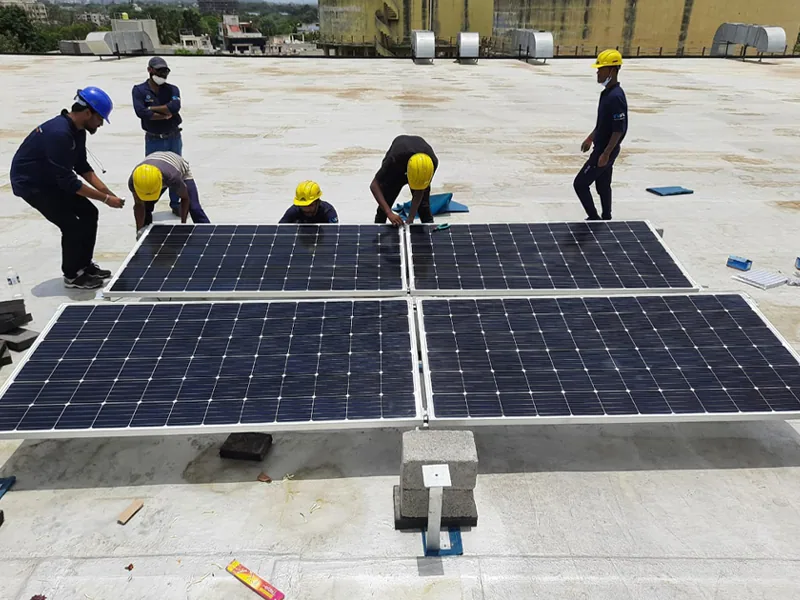
Our ISO 9001 certified site teams execute the civil, structural, and electrical works in parallel to minimise downtime. Industrial projects from 250 kW to 1 MW are commissioned within 6–10 weeks.
SCADA Monitoring & AMC
Post-commissioning, the plant is integrated into our SCADA dashboard for real-time performance visibility. Annual Maintenance Contracts (AMC) ensure 99%+ uptime over the 25-year plant life.
Rooftop, ground-mount or open access: three ways to power a plant
The right route depends on your roof, your land and your connection. We advise on all three.
Rooftop on your sheds
RCC and metal-sheet roofs, connected behind your meter. Net metering applies within the limits your state regulator sets.
Ground-mount on your land
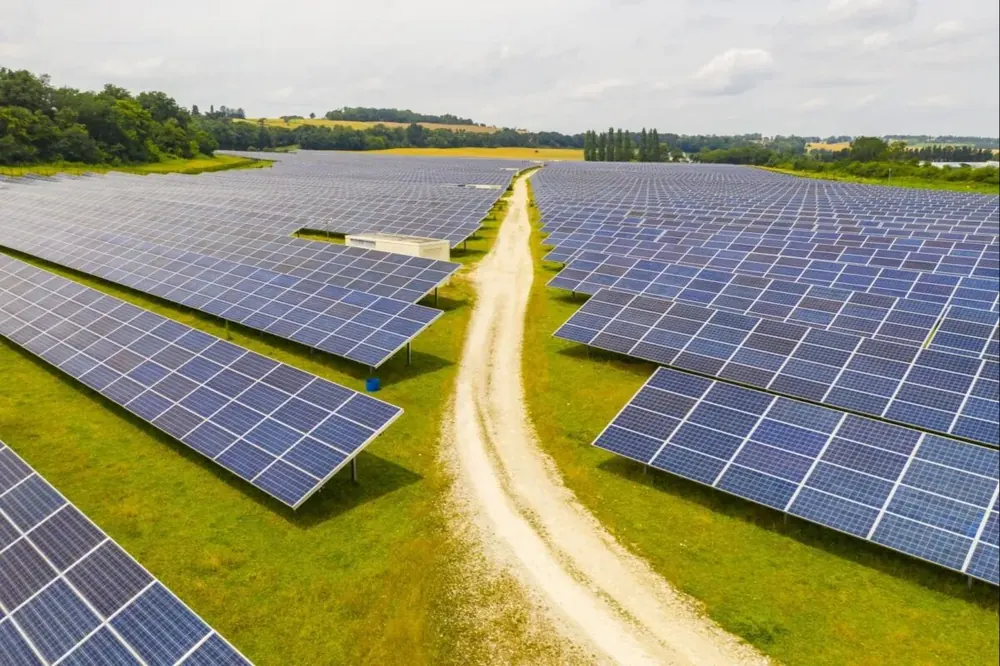
For plants with open land and little usable roof. Panels sit at the best tilt and the plant scales to multi-MW. See the ground-mount solar park page.
Open access and captive
Power from an off-site plant delivered through the grid, for consumers above the minimum contracted demand in the open-access rules. Read about open access, group captive and wheeling charges.
What moves the cost of an industrial plant
These are factors, not prices. The DPR puts a number on each one for your plant.
Load and maximum demand
Your daytime consumption, contracted load and tariff slab set the plant size that pays back.
Roof or land
Shadow-free area, roof type and the structural load check decide how much capacity fits and how it is mounted.
Route and approvals
Net metering, banking and open-access charges differ by state and by route, and so does the approval path.
Finance structure
Own it with CAPEX or a loan, or use a zero-capex RESCO model. The choice changes cash flow and who claims depreciation.
Tax
GST on solar systems is 5% since 22 September 2025, and a supply-and-install contract blends to about 8.9%. Depreciation and input tax credit follow ownership. See the GST guide and the depreciation guide.
Scale
The sizes table above shows how per-kW economics change from 100 kW to 1 MW and beyond. The 1 MW cost guide goes deeper.
Industrial Solar, Frequently Asked Questions
Everything you need to know before going solar.
Still have questions? What system size do I need for my factory?
What is open-access solar and is it suitable for my plant?
How much rooftop or ground area is needed for a 500 kW plant?
Does the 40% accelerated depreciation apply to industrial buyers?
Can the solar plant be financed? What are the typical loan terms?
What happens to excess generation if my plant produces more than we consume?
Does an industrial solar plant get the PM Surya Ghar subsidy?
What approvals does an industrial solar plant need?
Industrial guides, estates and related services
Estates and cities
Guides
Related services
- Commercial solar offices, shops, hospitals
- Ground-mount solar park
- Turnkey solar EPC
- Solar savings calculator
Ready to cut your factory's power cost to ₹2–₹3 per unit?
Request a free industrial energy audit. Our engineers will deliver a full DPR with generation estimates, ROI projections, and payback modelling within 5 business days.
Speak to an Industrial Solar Expert
Fill in your details and one of our industrial energy consultants will call you within 2 hours on business days. Come prepared with your monthly consumption figures and we will give you a ballpark savings estimate on the call.
- Free industrial energy audit and shadow analysis
- Bankable DPR with 25-year financial projections
- 40% depreciation & GST ITC benefit calculation
- Finance options: CAPEX, loan, or zero-capex RESCO
Request Your Free Industrial Energy Audit
Gujarat guides
Factory solar, estate by estate
Each guide names the electricity licensee that serves the area, the approvals involved and how the roofs there are built.