The ALMM List-II exemption just got a lifeline that every factory owner, warehouse operator, and open access buyer in India needs to understand this week. On 18 July 2026, the Ministry of New and Renewable Energy (MNRE) issued Office Memorandum No. 283/53/2026-GRID SOLAR, extending the exemption from ALMM List-II (the Approved List of Models and Manufacturers for solar PV cells) for net metering projects and open access renewable energy projects right up to 31 December 2026. The previous cut-off was 31 May 2026, so this is a five-month runway that reopens panel choice for commercial and industrial solar. If you commission your plant on or before the deadline, you can still use modules built with cells that are not yet on ALMM List-II, which usually means wider availability and lower cost. Miss it, and full List-II compliance becomes mandatory from 1 January 2027.
Direct answer. MNRE’s 18 July 2026 order extends the ALMM List-II (solar PV cells) exemption for net metering and open access renewable projects to 31 December 2026, five months beyond the earlier 31 May 2026 cut-off. Projects commissioned by that date may use non-List-II cells; those commissioned in 2027 must comply. Heaven Green Energy is helping C&I clients commission before the deadline.
📄 MNRE Office Memorandum No. 283/53/2026-GRID SOLAR
The original order, dated 18 July 2026, download the official PDF.
The catch is in one word: commissioned. Not booked, not delivered, not half-installed, commissioned and synced to the grid. This guide breaks down exactly what the order says, who it covers, and how to plan your timeline so the exemption actually applies to you.
What does the MNRE ALMM List-II exemption extension actually say?
The order provides a limited window (not a permanent removal) of the ALMM List-II requirement for two specific project types. In plain terms, MNRE has decided there will be no blanket extension of ALMM List-II for solar power projects generally, but net metering and open access renewable projects get a special dispensation to commission with an exemption from the List-II (solar PV cell) rule until 31 December 2026.
To understand why this matters, you need the ALMM basics. ALMM is India’s quality-and-domestic-manufacturing gatekeeper. List-I covers finished solar modules; List-II covers the solar cells inside those modules. From 1 June 2026, MNRE’s baseline rule required that modules used in government-linked, net metering, and open access projects source their cells only from List-II-approved Indian manufacturers. This new memorandum supersedes a chain of earlier orders (dated 25 May, 8 June, 15 June, and 23 June 2026) and settles the timeline at 31 December 2026 for these two categories.
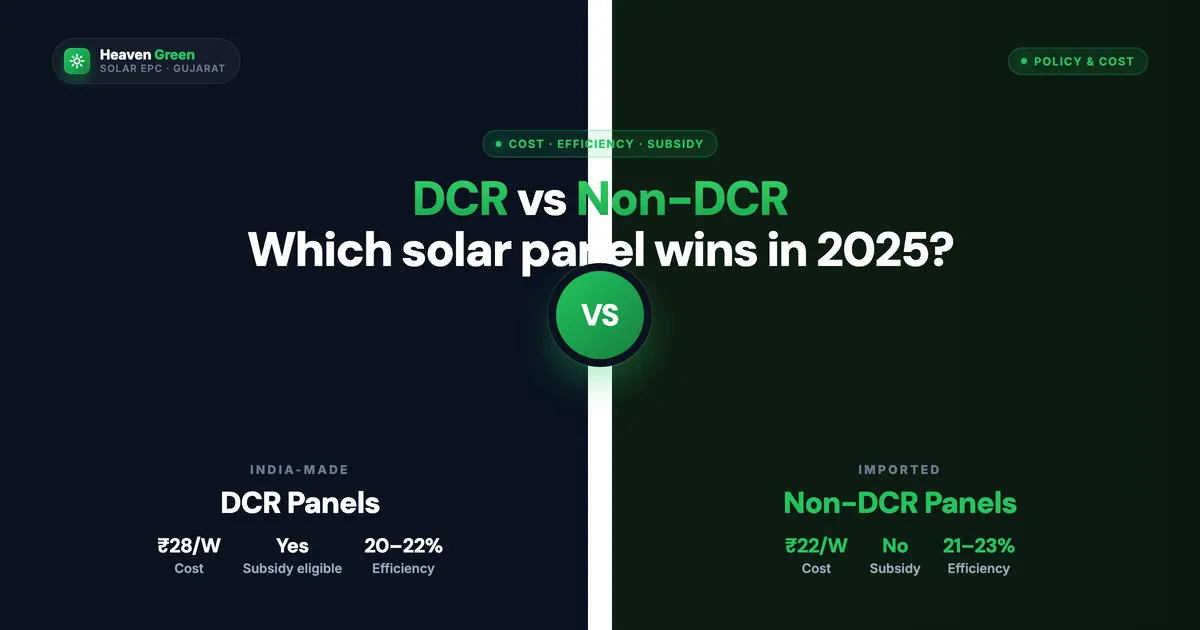
The stated reason is a smooth transition. MNRE says the decision followed detailed deliberations with solar-industry stakeholders, giving module makers more time to shift their cell sourcing to List-II suppliers as domestic cell capacity scales up. You can read the order itself in the official MNRE Office Memorandum (PDF), find it listed under MNRE Current Notices, and read the broader policy on the MNRE ALMM page. For a homeowner-level primer on why domestic-content rules exist at all, see our explainer on DCR vs non-DCR solar panels.
ALMM List-I vs List-II: modules versus cells
The single most common confusion is treating ALMM as one rule. It is two separate lists that regulate two separate parts of the panel. Getting this distinction right decides whether your project qualifies for the exemption.
| Dimension | ALMM List-I | ALMM List-II |
|---|---|---|
| Covers | Finished solar PV modules (panels) | Solar PV cells inside the modules |
| First issued | 10 March 2021 | 31 July 2025 |
| Status for net metering / open access | Mandatory, no exemption | Exempt till 31 December 2026 (this order) |
| What it controls | Which panel models are grid-approved | Whether the cells are Indian-made and approved |
| Analogous concept | Approved product list | A cell-level domestic content requirement |
Source: MNRE ALMM page: List-I first issued 10.03.2021, List-II first issued 31.07.2025.
The table makes the point: List-I never went away. What the 18 July order touches is only List-II. A module can sit on List-I while using imported or not-yet-List-II cells, and for net metering and open access projects, that combination is legal to commission until the year-end deadline. This is close in spirit to the older non-DCR allowance, though the two schemes are legally distinct.
MNRE first published the ALMM List-II for solar PV cells on 31 July 2025, and has revised it several times since. You can verify the underlying notice on the MNRE List-II publication page. If you are choosing panels for a C&I roof or ground-mount, our guide on how to choose solar modules walks through the specs that matter beyond ALMM status.
Who does the December 2026 exemption cover?
Two project categories, named explicitly in the order: net metering projects and open access renewable energy projects. MNRE’s clarification O.M. No. 283/54/2026-GRID SOLAR dated 4 August 2026 adds that “net metering” here covers all other forms of grid connection too, including gross metering, net billing, net feed-in, virtual net metering and group net metering, but not behind-the-meter connections. It also confirms the exemption applies whether the project started before or after 18 July 2026, with no application needed on the DCR portal. Behind-the-meter plants used solely for captive consumption by private consumers are outside ALMM List-I and List-II altogether, while government and PSU behind-the-meter plants follow the same 31 December 2026 cell exemption. Bid-awarded projects follow their own bid-date cut-offs set out in the clarification.
Net metering is the arrangement where a rooftop or on-site solar plant feeds surplus power back to the grid and the consumer is billed on the net of import minus export. It is the backbone of most factory, warehouse, hospital, and commercial rooftop projects. Our detailed breakdown of net metering in India covers the meter, the credits, and the DISCOM (electricity distribution company) process.
Open access lets a large consumer buy renewable power from a third-party generator through the grid, paying wheeling and other charges. It is common for energy-intensive industries that cannot host a large enough plant on their own premises. If you procure solar through a group captive or third-party open access model, this exemption directly affects your commissioning strategy.
💡 Fast tip
Ground-mounted C&I plants that sell or wheel power under open access, and factory rooftops on net metering, are the two clear winners here. A quick eligibility check with your EPC now saves a scramble in December.
Here is how the ALMM List-II timeline has moved for these categories, so you can see exactly where the new deadline sits.
| Date | What happened | Source |
|---|---|---|
| 31 Jul 2025 | First ALMM List-II for solar PV cells published | MNRE, 2025 |
| 1 Jun 2026 | List-II cell sourcing becomes the baseline requirement | MNRE, 2024 order |
| 31 May 2026 | Earlier exemption window for net metering / open access closes | MNRE, 2026 |
| 18 Jul 2026 | Exemption reopened and extended to year-end | MNRE O.M. 283/53/2026 |
| 31 Dec 2026 | Final commissioning deadline for the exemption | MNRE, 2026 |
| 1 Jan 2027 | Full List-II compliance mandatory for these projects | MNRE, 2026 |
One important clarity from the order: any reference to the superseded memoranda that appears in other MNRE orders on ALMM is to be read as amended in line with this decision. So the 31 December 2026 date is now the single, controlling deadline for these categories, earlier dates in older circulars no longer bind you.
The numbers behind the extension
Why did MNRE blink? Because the arithmetic of domestic cell supply did not add up in time. India’s approved cell capacity is still far below its module capacity, and forcing every project onto List-II cells overnight would have stranded projects and raised prices.
The gap is stark: approved domestic cell capacity is still well below module capacity, so cell supply is the bottleneck, even as MNRE keeps adding manufacturers through regular List-II revisions. Policy research bodies have flagged this mismatch, the CEEW analysis on unlocking solar manufacturing explains why cell and wafer capacity lags module lines. MNRE’s own amendment history, summarised in this PIB press release on the ALMM Order, shows the government sequencing List-I for modules and then List-II for cells, with the cell requirement first set to apply from 1 June 2026.
For an industry buyer, the takeaway is practical, not political. Until domestic cell lines catch up, the exemption keeps competitively priced modules on the table. That is real money on a large ground-mount job, and the reason smart operators are moving now. If you want to see why the timing favours acting rather than waiting, read why delaying solar costs industries more.
What “commission before 31 December 2026” means for your project
The word doing all the work in this order is commissioned. MNRE does not reward you for signing a contract or receiving panels in 2026, it rewards a plant that is fully installed, inspected, metered, and synchronised to the grid on or before 31 December 2026. Here is the sequence your EPC must complete inside the window.
Work backwards from 31 December. Inspection and meter installation queues get crowded in Q4, so a project that starts procurement in October is cutting it fine. A realistic C&I ground-mount or large rooftop needs its build to begin well before then to clear commissioning comfortably.
Get a free site visit. A solar advisor responds within 2 hours on business days, then our engineer visits, sizes your plant against the December deadline, and sends a custom proposal, no cost, no obligation. Get your free quote →
The Heaven Green ALMM Deadline Readiness Test
Across our installations we have learned that missed deadlines are rarely about panels, they are about paperwork and sequencing. So we use a simple five-check test to tell a client, in one conversation, whether a 31 December 2026 commissioning is realistic. Score one point per “yes”; four or five means go, two or three means move fast, zero or one means the exemption is likely out of reach.
The value of the test is honesty. It stops a buyer from ordering panels in November on the assumption that installation is the hard part, when in reality the DISCOM inspection and meter queue is what sinks December deadlines. Run this test against your own project today. If you are unsure of your category or timeline, our industrial solar EPC team can score it with you on a single call.
Red flags that can cost you the exemption
The exemption is generous, but it is unforgiving on process. These are the mistakes we see most often, each one can push your commissioning into 2027 and force full List-II compliance.
-
1
Treating "installed" as "commissioned", the plant must be inspected, metered, and synchronised. Panels on the roof do not count.
-
2
Filing the DISCOM application late, feasibility approval and inspection have their own queues; a December filing rarely clears in time.
-
3
Using a module not on ALMM List-I, the exemption relaxes List-II cells only. A non-List-I panel is still ineligible.
-
4
Assuming a further extension. MNRE has been explicit: no blanket extension. Projects commissioned in 2027 must comply with List-II.
If your DISCOM process feels opaque, our state-specific guide to Gujarat solar policy shows how the empanelled-vendor and net metering steps flow in practice across UGVCL, DGVCL, MGVCL, and PGVCL.
Non-List-II cells vs List-II cells: what it means for cost and panel choice
Should you rush to use the exemption, or simply build to full List-II compliance now? The honest answer depends on your timeline and budget. Here is the trade-off, side by side.
- ✓ Wider module availability, not limited to List-II-cell stock
- ✓ Often lower per-watt cost while cell supply is tight
- ✓ Faster procurement, shorter lead times
- ✓ Locks in today's pricing before 2027 compliance
- ✗ Hard 31 December 2026 commissioning wall
- ✗ Q4 DISCOM inspection queues get crowded
- ✗ No benefit if your category isn't net metering / open access
- ✗ Future expansions may still need List-II cells
Verdict. If you already have a live net metering or open access project that can realistically commission by year-end, use the window, it widens panel choice and protects your cost. If your project cannot clear DISCOM inspection before December, plan for full List-II compliance instead of gambling on a queue. For anything on the fence, the deciding factor is your DISCOM timeline, not your panel order.
Panel quality does not drop because of where the cells sit on a list, a strong module is a strong module. What changes is your sourcing flexibility. If you want to weigh actual panel economics for your load, our solar calculator sizes the system and estimates savings in about 60 seconds.
How Heaven Green Energy Helps
Heaven Green Energy has completed 10,000+ solar installations across 25+ cities, and our teams know the difference between a plant that is installed and one that is commissioned on the record. For this deadline specifically, we manage the whole path (DISCOM filing, ALMM List-I module sourcing, installation, inspection scheduling, and commissioning) so your net metering or open access project clears the 31 December 2026 window with room to spare. We plan Q4 projects backwards from the inspection queue, not forwards from the purchase order, which is the single biggest reason our deadline projects land on time.
- Industrial Solar EPC, 100 kW+ turnkey ground-mount and factory-roof plants with commissioning managed against policy deadlines.
- Commercial Solar, rooftop and open access systems for offices, warehouses, and hospitals with net metering handled end-to-end.
- Turnkey Solar EPC, design, procurement, and grid synchronisation under one accountable contract.
- Solar Calculator, size your plant and see savings before you commit, in 60 seconds.
For installers: read about our channel partner programme for installers.
Sources and official references
Every date and figure in this article is drawn from primary government documents and high-authority reporting. Verify them yourself:
- MNRE Office Memorandum No. 283/53/2026-GRID SOLAR, 18 July 2026 (PDF), the order itself, extending the ALMM List-II exemption for net metering and open access projects to 31 December 2026. Download a mirrored copy hosted on our site.
- MNRE Current Notices, official listing where the 18 July 2026 notice appears.
- MNRE. Approved List of Models and Manufacturers (ALMM), the ALMM regime, List-I and List-II background.
- MNRE. Publishing ALMM List-II for Solar PV Cells (31 July 2025), the first List-II for cells.
- Mercom India. MNRE allows commissioning of projects awaiting ALMM-II exemption and MNRE panel to review ALMM cell exemption requests, coverage of the exemption process and expert committee.
- PIB (Amendment to the ALMM Order 2019) the sequencing of List-I, List-II, and List-III.
- CEEW. Unlocking solar manufacturing potential, analysis of the cell-versus-module capacity gap.
- MNRE O.M. No. 283/54/2026-GRID SOLAR, 4 August 2026 (PDF), the clarification: what “net metering” covers, no DCR-portal application needed, behind-the-meter and government-building rules, and that ALMM orders do not relax scheme DCR rules.
- National DCR Portal (NISE), the portal for DCR verification under MNRE schemes. No application is needed here for the net metering and open access List-II exemption.
Frequently Asked Questions
What is the new ALMM List-II exemption deadline?
MNRE’s Office Memorandum dated 18 July 2026 sets 31 December 2026 as the deadline for net metering and open access renewable energy projects to commission with an exemption from the ALMM List-II (solar PV cell) requirement. The earlier window ended on 31 May 2026, so this is a five-month extension. Projects commissioned on or before 31 December 2026 can use modules whose cells are not on List-II; projects commissioned from 1 January 2027 must comply fully with List-II.
Does this exemption apply to all solar projects?
No. The exemption applies only to two categories named in the order: net metering projects and open access renewable energy projects. MNRE has explicitly stated there is no blanket extension of ALMM List-II for solar power projects generally. Government-linked utility projects outside these two categories remain subject to their own timelines. If your project is a net metering (including gross metering, net billing or virtual net metering) or open access plant, you qualify. Private behind-the-meter captive plants are outside ALMM List-I and List-II altogether, and bid-awarded projects follow bid-date cut-offs.
What is the difference between ALMM List-I and List-II?
ALMM List-I is the Approved List of Models and Manufacturers for finished solar modules (panels), first issued in March 2021. ALMM List-II covers the solar PV cells inside those modules, first published on 31 July 2025. From 1 June 2026, modules in covered projects had to use List-II cells, but this order defers the List-II cell rule for net metering and open access projects to 31 December 2026. List-I compliance for the module itself is unchanged and still mandatory.
What does “commissioned” mean for the deadline?
Commissioned means the plant is fully installed, inspected by the DISCOM, fitted with the appropriate meter, and synchronised to the grid, with a commissioning certificate issued on or before 31 December 2026. It does not mean the panels are ordered, delivered, or merely mounted. Because the commissioning date is what counts, your EPC should work backwards from the DISCOM inspection queue, which gets crowded in the final quarter of the year.
Can I still use non-DCR or imported-cell panels?
For net metering and open access projects commissioned by 31 December 2026, yes, the exemption relaxes the requirement that cells come from ALMM List-II, so modules built with non-List-II cells (often imported cells) are permitted. The module itself must still be on ALMM List-I. This does not relax DCR rules in subsidy schemes: MNRE’s 4 August 2026 clarification says ALMM orders have no impact on DCR provisions, so a PM Surya Ghar subsidy still needs domestically manufactured cells and modules. See our guide on DCR vs non-DCR solar panels for how the cell-origin rules translate into panel choice and cost.
Why did MNRE extend the exemption?
Domestic solar cell capacity has not scaled fast enough. India’s ALMM List-II approved cell capacity is still well below its module manufacturing capacity, so cell supply is the bottleneck. Forcing every project onto List-II cells immediately risked stranding projects and raising prices. MNRE extended the window after deliberations with industry to allow a smoother transition as more domestic cell lines get approved and come online.
What happens to projects commissioned after 31 December 2026?
They must comply fully with the ALMM List-II provisions. From 1 January 2027, net metering and open access projects will be required to use modules whose cells are sourced from ALMM List-II-approved Indian manufacturers. MNRE has stated there is no blanket extension beyond this date, so buyers should not plan on a further reprieve. If your timeline slips into 2027, budget and design for List-II-compliant modules from the outset.
How can Heaven Green Energy help me meet the deadline?
We manage the full commissioning path for net metering and open access projects (DISCOM application, ALMM List-I module procurement, installation, inspection scheduling, and grid synchronisation) planned backwards from the year-end inspection queue. A solar advisor responds within 2 hours on business days, then our engineers run a free site assessment and send a custom proposal, so you know quickly whether a 31 December 2026 commissioning is realistic for your site. Call +91 63904 05060 or request a callback to start.