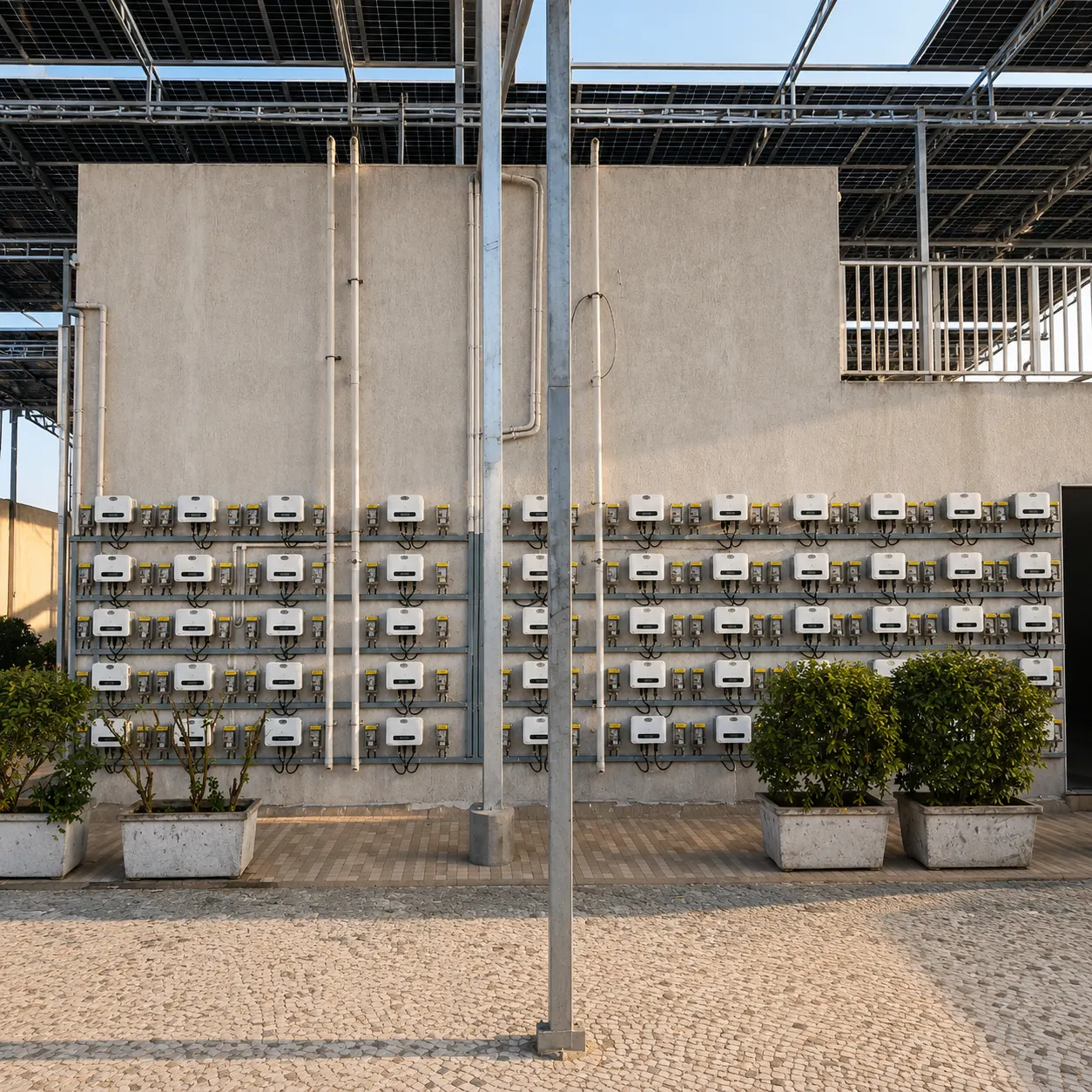
A commercial rooftop project can finish its physical installation and still be unable to commission because its electrical-inspector file is incomplete. Gujarat’s process separates smaller self-certified systems from projects that need Chief Electrical Inspector (CEI) drawing and inspection steps. The precise route should be confirmed for the application and voltage, then scheduled alongside DISCOM feasibility and meter work.
Direct answer. Gujarat’s SURYA Gujarat installer manual, dated 30 November 2020, uses approved-supervisor or contractor self-certification up to 10 kW and a CEI application reference above 10 kW. GERC’s 2024 rooftop amendment retains CEI drawing and charging-approval steps. This rooftop workflow split does not settle every statutory inspection duty under CEA’s 2023 safety regulations. Check the current portal and approved connection before commissioning.
Current-instrument check, 30 October 2026. GERC has published DRES Regulations, Notification 11 of 2026, with commencement tied to Gazette notification. Its eligibility and process provisions retain applicable CEI approvals. The older SURYA Gujarat manual below is evidence of a dated portal workflow, not proof that the same self-certification split governs every new 2026 application. Confirm the current inspectorate and licensee route before energisation.
The current MGVCL LT rooftop document checklist, checked on 30 October 2026, lists self-certification at up to 10 kW and CEI drawing and charging approval above 10 kW. Its HT rooftop checklist separately asks for CEI records. These are licensee application requirements; confirm the current route for the actual voltage and connection.
Which Gujarat rooftop projects follow the CEI route?
The GUVNL SURYA Gujarat installer manual, version 1.5 dated 30 November 2020 describes the portal split plainly. For systems up to 10 kW, the installer uploads a self-certificate and licence certificate from a CEI-approved electrical supervisor or contractor. For systems above 10 kW, the installer enters the CEI application reference from the Investor Facilitation Portal for drawing approval. Its later section describes a CEI inspection reference where inspection applies. These are process steps, not an instruction that every 10 kW system can be energized without safety checks.
The GERC Fourth Amendment to the rooftop regulation, notified 23 September 2024, places CEI approval of single-line, earthing and wiring diagrams in its application schedule. It also lists installation charging approval among documents needed at the completion and commissioning stage, and calls for inverter anti-islanding protection plus a second line of protection for systems above 10 kW. The amendment is the current regulator source for the process described here. A later GERC Fifth Amendment in November 2025 changed other rooftop process and connectivity provisions, so verify the live application screen before relying on a printed checklist.
The 10 kW figure should not be confused with the voltage or generating-plant thresholds in the CEA Measures Relating to Safety and Electric Supply Regulations, 2023. The CEA regulations set national safety duties and inspection conditions. State electrical inspectorates administer their jurisdiction. A factory with an HT incoming system may have existing statutory inspection obligations separate from its solar array’s nameplate size. The EPC should identify both the rooftop CEI workflow and the wider plant electrical-safety scope.
The Drawing-to-Energisation File is a practical way to track the route: approved drawings, installed-as-built records, inspection or self-certification, meter tests, then commissioning evidence. A missing item can hold the later stage even when panels are on the roof. The Gujarat solar-permits guide covers the wider permit landscape; this page is focused on the electrical-inspector path.
| Gujarat rooftop size in the GUVNL manual | CEI-related portal evidence | Separate check |
|---|---|---|
| Up to 10 kW, manual dated 30 November 2020 | CEI-approved contractor or supervisor self-certificate and licence certificate | Confirm current portal route and DISCOM commissioning conditions |
| Above 10 kW, manual dated 30 November 2020 | CEI application reference for drawing approval and applicable inspection stage | Confirm approved protection, voltage and charging approval |
This table is a guide to the cited official workflow. It is not a waiver for any project whose voltage, equipment or site conditions trigger another inspection requirement.
What drawings and certificates should be prepared?
A CEI file starts with an accurate single-line diagram. It should show the rooftop array, inverter, AC and DC isolation, protection devices, transformer where present, point of common coupling and DISCOM meter. An earthing diagram should show equipment and structure connections, earth pits and test points. A wiring diagram should match cable sizes and routing. The GERC 2024 Fourth Amendment names the single-line, earthing and wiring diagrams in the CEI approval stage.
The construction record should match those approved drawings. If a cable route, inverter rating or point of connection changes on site, the as-built set should record the change and the EPC should check whether revised approval is needed. A drawing approved for one connection arrangement is not proof that a different final arrangement is accepted. This is especially important at HT premises, where transformer position and protection coordination affect both safety and revenue metering.
The same 2024 GERC process table lists completion-stage evidence such as solar ownership, CEI installation charging approval where required, meter or CT/PT testing certificates, equipment compliance records and protection features. The exact document bundle depends on the application route. The CEA 2023 safety regulation sets solar safety requirements including accessible isolation, earthing, cable identification and protection. The inspector’s review is not a substitute for those design duties.
A useful owner file contains approved and as-built drawings, inverter and module data sheets, equipment test certificates, earthing test records, insulation test records, protection setting sheet, contractor licence and the DISCOM application references. Keep the meter-test report and commissioning certificate with it. This file lets the plant engineer answer an inspection query without searching across several vendors’ messages. The solar commissioning guide explains how the final handoff fits the wider project.
For a large home, the same record is valuable even if a self-certification route applies. A later inverter replacement, roof alteration or meter dispute is easier to handle when the approved diagram and commissioning record are available. The document burden may be smaller than at a factory, but the electrical safety obligations remain real.
How do CEI drawing approval and inspection fit the DISCOM sequence?
There are parallel tracks. GEDA or the designated state agency registers the rooftop project under the applicable scheme. The CEI track reviews drawings and, where required, the installed electrical work. The DISCOM checks technical feasibility, network and meter arrangements, then completes connection and commissioning steps. The GERC Fourth Amendment of 23 September 2024 sets out these activities in a sequence table. The exact portal screens and forms can change, so use the current application status as the project record.
The GUVNL meter-installation procedure dated 10 September 2019 shows why the handoff matters. The installer must complete CEI-related portal fields before the system sends the meter-installation task to the DISCOM. For systems above 10 kW, the procedure asks for the CEI application reference in the approval and inspection stages. For smaller systems, it describes self-certification. It also lists meter number and installation details that the DISCOM enters on its own side.
A practical timeline is therefore based on dependencies rather than a promised number of days: feasibility and approved arrangement, CEI drawings, installation, inspection or self-certification, meter test, DISCOM meter, then final commissioning. The GERC 2024 amendment states regulatory service targets for several steps, but an incomplete application can restart a review. A proposal should identify who uploads each document and who tracks corrections.
At an HT factory, coordinate this sequence with any planned electrical tie-in and production shutdown window. A CEI drawing change after switchgear work has started may affect cable runs and protection settings. The industrial solar installation guide explains the plant-scale sequencing. The CEI file should be approved early enough for procurement and installation to follow the accepted design, not prepared only after equipment is installed.
Verdict. The panel installation, CEI file and DISCOM meter are one commissioning chain. Treat the drawing approval as a design gate and the inspection record as a handoff gate.
What usually causes a CEI file to be returned or delayed?
A returned file is often a mismatch rather than an exotic technical failure. The application may state one inverter rating while the drawing shows another. The meter point may be unclear, or the earthing drawing may not match the installed layout. The contractor’s licence may be missing or expired. A protection setting or test record may be absent. These are common document-control risks to check, not invented statistics about how often Gujarat applications fail.
The GERC 2024 Fourth Amendment expressly lists diagrams, CEI charging approval, meter or CT/PT tests, equipment compliance and protection among process items. A buyer can turn that list into a pre-submission check. Ask the EPC to compare the single-line drawing against the latest DISCOM feasibility letter and the installed equipment list. Record revision numbers on every drawing so the inspector and site electrician review the same version.
Protection is a frequent source of confusion because an inverter’s anti-islanding feature is not the whole interface design for every size. The cited GERC amendment calls for a second line of protection, such as a no-volt relay, above 10 kW in its completion-stage list. The actual approved protection diagram governs. A factory with an HT transformer needs coordination between solar and existing switchgear, including fault and trip behaviour. A generic “inverter is grid compliant” statement is too thin for that review.
A changed roof layout can also affect safe access, cable routes and fire pathways. The CEA 2023 safety regulation has solar-specific provisions for access, isolation and earthing. Photograph the completed routing and keep tests with the as-built record. If the inspector asks for a correction, close it with a revised document and a dated test rather than a verbal assurance.
Pre-submission check
Match inverter nameplate, sanctioned connection, meter location, drawing revision and test certificates before uploading the CEI file.
- ✓ Drawings, CEI and DISCOM handoffs have owners.
- ✗ Bid says approvals included without documents or route.
Regulation note
The GUVNL 10 kW portal split is a Gujarat workflow rule. It does not replace the CEA safety duties for the whole electrical installation.
Check the approval path before ordering equipment. Share the connection voltage, proposed capacity and DISCOM documents through commercial solar. Ask which inspection and protection decisions the proposal assumes.
Does a 10 kW self-certificate remove electrical safety duties?
No. The small-system route changes the form of evidence in the cited GUVNL portal manual; it does not make rooftop work exempt from safe installation. The GUVNL manual of 30 November 2020 requires the self-certificate and licence certificate of a CEI-approved electrical supervisor or contractor for systems up to 10 kW. The person signing is taking responsibility for conformity with applicable electrical-safety requirements.
The CEA safety regulation notified in June 2023 includes solar-specific requirements for roof access, isolation, marking, overcurrent and surge protection, earthing and other safeguards. These apply by the regulation’s terms, independent of whether the portal asks for a full CEI drawing approval. A homeowner should still ask for the as-built single-line diagram, isolation points and test results. A business should add the switchboard and load interface to that file.
The 10 kW split is also not a voltage rule. A larger electrical installation can have obligations because of its supply voltage or generating equipment even if one rooftop sub-array is small. Conversely, a 12 kW rooftop on a simple LT building follows a different engineering review from a 500 kW plant at an HT factory. The inspectorate and DISCOM should be asked about the actual connection. The HT versus LT solar guide explains the broader electrical distinction.
Do not split one proposed rooftop plant into several nominal 10 kW applications to claim a small-system route. The regulator and portal assess the relevant connection and aggregate project arrangement. The safe procurement question is what complete electrical system is being connected, not how many inverter labels appear on a quotation. Ask the EPC to state the aggregate capacity and the approved route in writing.
If the portal or regulation changes, use the updated requirement. The GUVNL manual is a dated official process document, while the 2024 GERC amendment and CEA 2023 regulation add later controls. The EPC should check the live portal before submission, and the owner should keep a copy of the exact accepted documents.
What are the Maharashtra and MP equivalents?
Maharashtra and Madhya Pradesh also use electrical-inspector and DISCOM processes, but Gujarat’s 10 kW SURYA Gujarat portal split should not be copied into either state as a legal threshold. The MERC rooftop regulation, 2019 sets the Maharashtra rooftop connection and technical requirements. The MPERC RG-39(II) rooftop regulation notified 14 March 2024, with its 18 June 2026 amendment, sets MP’s rooftop process. Neither makes the GUVNL installer manual the governing document outside Gujarat.
The national CEA Measures Relating to Safety and Electric Supply Regulations, 2023 remain a common safety baseline. The state inspectorate applies its jurisdiction and local process. A Maharashtra factory should confirm whether its HT equipment, transformer or new solar interface needs inspector approval under the applicable state route. An MP factory should do the same before scheduling meter installation. The answer can depend on voltage and the scope of electrical alteration, not just panel kW.
A cross-state EPC should supply a state-specific approvals matrix. It should list the responsible inspectorate, drawing set, submission portal, electrical contractor licence, inspection record, meter-testing requirement and commissioning sign-off. This is more useful than a single line saying “CEIG included.” The owner can then see which approval is on the critical path and who owns a returned drawing.
| State | Rooftop regulatory source | Approval question to ask |
|---|---|---|
| Gujarat | GERC 2024 Fourth Amendment and GUVNL portal manual | Does the project use self-certification or CEI drawing and inspection references? |
| Maharashtra | MERC 2019 rooftop regulation plus current inspectorate procedure | Which state inspector sign-off applies to the actual voltage and works? |
| Madhya Pradesh | MPERC 2024 regulation and 2026 amendment plus inspectorate procedure | Which drawing and safety approval is required before DISCOM meter work? |
The matrix deliberately avoids invented Maharashtra and MP kW thresholds. Obtain the local inspectorate’s current written route for the specific plant. A false cross-state threshold can hold up a real commissioning file.
Where do approval delays enter the project schedule?
The first delay point is an incomplete application. If the drawing set lacks the meter point, inverter rating, protection diagram or contractor licence, the reviewer cannot compare the proposal with the approved connection. The EPC should perform a completeness review before upload and keep the acknowledgement number. A returned drawing should be tracked as a specific revision task, with an owner and due date, rather than described vaguely as a government delay.
The second point is a change after approval. A factory may move an inverter to make room for another machine or change the cable route during roof work. If the approved single-line drawing no longer describes the installed system, the EPC should ask whether the CEI and DISCOM need revised drawings. Late changes can also affect earthing, isolation, CT placement and meter-testing plans. Freeze the electrical interface before ordering major switchgear where possible, and record every approved revision.
The third point is a handoff between agencies. The GUVNL meter-installation procedure dated 10 September 2019 shows that CEI-related fields and DISCOM meter-task fields must both be completed in the portal workflow. A project can have a completed CEI inspection yet wait for meter testing or a DISCOM entry. The GERC Fourth Amendment of 23 September 2024 lists the activities and official time targets, but those targets begin from the stated complete submission conditions. They are not a promise from an EPC about a customer’s commissioning date.
The fourth point is site readiness. An inspector cannot verify an installation that has not reached the agreed test state. The plant should have access to the switchboard, safe roof routes, test instruments and a qualified representative available. An HT factory may also need a planned interruption for a final tie-in. Align that window with the CEI and DISCOM sequence rather than booking it from a panel-delivery date alone.
Ask for a weekly approval tracker with each reference number, drawing version, submitted document, response and next owner. That record lets the business distinguish an agency review from a missing contractor document or a pending meter test, without inventing a universal number of days for every project.
How Heaven Green Energy helps plan CEI Approval
Ask for the approval route in the signed scope, not merely the phrase “all approvals.” The EPC should identify whether the Gujarat project uses a self-certificate or CEI drawing and inspection path, name the responsible licensed electrical professional, and list the drawings and tests to be handed over. It should also name who pays statutory charges that actually apply, without assuming a generic CEIG price. Check the current fee schedule for this project and record who will pay each statutory charge.
The quote should include revisions after reasonable inspector comments, as-built drawings, meter and CT/PT test coordination where applicable, and attendance at commissioning. It should state who submits on GEDA or GUVNL systems and who follows the DISCOM work order. If the customer owns existing HT switchgear or transformer equipment, define whether the EPC is inspecting or modifying it. A scope gap at this interface can become a commissioning delay.
- Confirm aggregate rooftop capacity and supply voltage.
- Identify the Gujarat CEI or self-certification route from current official instructions.
- Approve the single-line, earthing and wiring drawings before procurement.
- Verify contractor licence and planned protection tests.
- Record the CEI application and inspection references where required.
- Match the final installed equipment to the approved drawing.
- Close meter tests, DISCOM meter work and commissioning evidence.
The commercial solar page is the proposal route for a business or large home with a complex connection. A factory can use industrial solar. For a homeowner, the residential solar page is the relevant service route. The owner should send the sanctioned-load record, current bill, roof plan and any existing electrical single-line drawing. That lets the EPC identify the approval path before promising a commissioning schedule.
- Approved and as-built drawings
- Licensed professional and references
- Protection and earthing tests
- Meter and commissioning handoff
- Only “approval included” in the bid
- No drawing revision responsibility
- Existing HT equipment omitted
- No owner copy of final records
The service routes for a site-specific review are:
- Commercial solar for a business bill and rooftop proposal.
- Industrial solar for a larger factory connection and protection review.
Frequently asked questions
Does every Gujarat rooftop plant need a CEIG inspection?
The official GUVNL installer manual uses self-certification by a CEI-approved electrical professional for systems up to 10 kW and a CEI application reference above 10 kW. The GERC 2024 rooftop amendment also lists CEI-related drawing and charging approval steps. The exact inspection route depends on the current application, voltage and scope of work. Safety duties still apply to smaller systems.
What does the CEI review for a larger rooftop plant?
GERC’s 2024 process names single-line, earthing and wiring diagrams. The completion file can include installation charging approval, meter or CT/PT test records, equipment compliance and protection evidence. The exact inspector questions depend on the plant’s voltage and design. Keep the approved drawing, as-built revision and test reports together so the installed system can be compared with the accepted scheme.
Is the Gujarat CEI threshold the same in Maharashtra and MP?
No. Gujarat’s 10 kW split comes from its GUVNL rooftop portal procedure and should not be treated as a national rule. Maharashtra and MP have their own inspectorate routes and rooftop regulations, alongside the CEA 2023 national safety regulations. Ask for the written local requirement for the proposed capacity, supply voltage and electrical alteration.
Can a plant be commissioned before CEI paperwork is complete?
Do not assume so. The GUVNL meter-installation procedure connects the CEI-related portal stage with the DISCOM meter task. The GERC 2024 amendment lists charging approval and other documents in the completion sequence. The project should not energize or export on an assumption that a later upload will cure a missing approval. Follow the current accepted portal route.
What causes a CEI drawing to be returned?
Common checkable risks include a mismatch between inverter rating and drawing, unclear meter or isolation points, incomplete earthing details, missing protection evidence, an outdated drawing revision or incomplete contractor credentials. These are diagnostic examples, not statistics about Gujarat rejection rates. Ask the EPC to reconcile drawings with the installed equipment and DISCOM feasibility letter before submission.
What should an EPC quote say about CEIG charges?
It should identify the applicable statutory fee source, who pays the fee and whether drawing revisions, inspection attendance and meter tests are included. A generic “CEIG charges included” line can hide a scope gap. The amount depends on the current official schedule and project route, so request a dated fee reference rather than a price copied from another project.